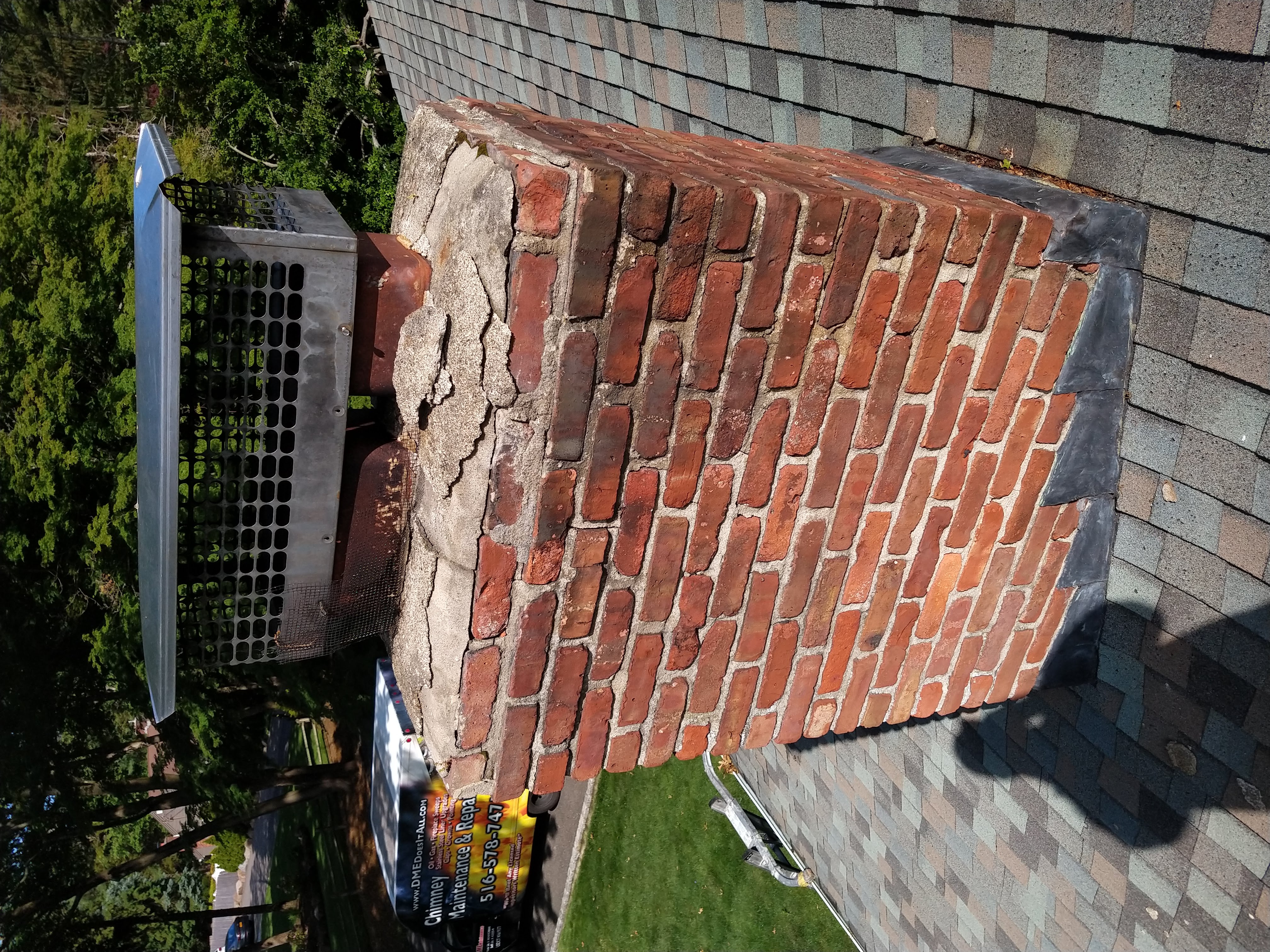
Chimneys are built to last, but mortar isn't. The material between your bricks weathers faster than the masonry itself. On Long Island, the freeze-thaw cycle does particular damage. Water gets into those joints during rain or snow. Then it freezes, expands, and pushes mortar apart. This cycle repeats every winter and spring. Over time, mortar crumbles and gaps widen. That's when pointing and tuckpointing become necessary. These are specialized techniques to restore weakened joints and seal your chimney against water infiltration. DME Maintenance has been performing this work on Long Island since 2001, and we understand exactly how Roosevelt's climate breaks down chimney mortar.
Pointing is the process of removing old, failed mortar and replacing it with new material matched to your chimney's original composition. Tuckpointing is similar but includes a decorative element, where a thin line of contrasting mortar or sealant is applied to the joint for visual appeal. Both methods require skill and experience. The mortar must be properly formulated for chimney use. It needs to flex slightly and allow water vapor to escape. If you use the wrong mortar, you trap moisture inside the chimney. That moisture then attacks the bricks themselves. Homeowners in Roosevelt who attempt DIY mortar work often make this mistake. The result is accelerated deterioration rather than repair.
Deteriorating mortar on Roosevelt chimneys creates a cascade of problems. When joints fail, water penetrates the brick structure. This water can seep into your home's interior walls and attic space. It causes staining, efflorescence, and mold growth. The moisture also compromises the structural integrity of the chimney. Bricks can spall and crack. The flashing at the roof line becomes compromised. And if you heat with oil, like many homes on Long Island, a wet chimney creates additional draft and efficiency issues. A chimney inspection often reveals mortar damage before homeowners even notice problems inside. That's why regular inspection matters, especially for older homes in Roosevelt.
Homes in Roosevelt were largely built in the mid-twentieth century. Many were constructed with solid brick chimneys designed to last generations. But "designed to last" assumes proper maintenance. If you've never had your chimney's mortar repointed, it's worth investigating. Mortar typically fails in cycles tied to the local climate. On Long Island, salt air from proximity to Long Island Sound, combined with freeze-thaw stress, accelerates that failure. Roosevelt residents who live near water face additional challenges from salt intrusion. The salt weakens mortar chemically, not just mechanically. A professional inspection can determine whether your chimney needs pointing now or soon.
The timing of pointing and tuckpointing work matters significantly. Spring and summer are the ideal seasons for this work on Long Island. Mortar needs to cure properly, and that curing depends on temperature and humidity. Cold, wet conditions slow curing and weaken the final product. Spring and early summer provide consistent warmth and lower humidity. Roosevelt homeowners who schedule this work in those seasons get better results. Summer is also convenient because heating systems sit idle. You can have the work done without worrying about your furnace or fireplace. Wait too long, and a minor mortar problem becomes major brick damage. Minor repairs cost far less than major reconstruction.
Water infiltration from failed mortar creates the most expensive problems. When water gets behind your chimney's outer shell, it damages the interior structure. It saturates the smoke chamber and flue liner. It migrates into the attic framing and insulation. Worse, it can leak into living spaces inside your home. Damp walls attract mold. Insulation loses its effectiveness. Structural wood begins to rot. Roosevelt homeowners often don't connect a leaky chimney to mysterious water stains in an upstairs bedroom or attic. But the connection is real and common. Pointing work stops this damage cycle before it starts. Think of it as preventive medicine for your home's most vulnerable feature.
The freeze-thaw cycle on Long Island is relentless. Winter temperatures regularly dip below freezing. Spring temperatures climb above freezing. This daily or weekly cycling happens repeatedly from November through March. Each cycle forces moisture in mortar joints to expand and contract. After several years of this stress, the mortar loses cohesion. It begins to powder and fall out. Homes in Roosevelt experience this wear year after year. By the time most homeowners notice visible gaps, the damage is already advanced. Professional inspection and repointing in spring or early summer interrupt this cycle and restore your chimney's weather resistance.
Salt air presents a unique challenge for Roosevelt chimneys. Long Island's location near Long Island Sound means salt spray and salt-laden air penetrate inland. This salt accelerates mortar deterioration through chemical attack, not just mechanical stress. Salt also promotes efflorescence, the white powder that appears on brick and mortar. While efflorescence itself is just cosmetic, it indicates that salt has penetrated the masonry. Roosevelt residents in areas with higher salt exposure may need more frequent mortar maintenance than homeowners further inland. An experienced contractor can assess your chimney's exposure level and recommend an appropriate maintenance schedule.
Pointing and tuckpointing also improve your chimney's structural integrity. When mortar fails, the bricks lose lateral support. Bricks can shift, tilt, or separate. This creates gaps that compromise the flue's ability to draft properly. It also allows air and moisture to bypass the chimney wall. If you have an oil furnace, draft problems mean wasted fuel and poor combustion. Fire safety concerns emerge too. A chimney with failed mortar is less able to contain heat and combustion byproducts. Repointing restores the structural bond between bricks. Your chimney becomes solid and secure again. The flue functions as designed.
DME Maintenance serves every street in Roosevelt. We have been cleaning chimneys on Long Island long enough to know exactly what local homes need — from older clay-lined flues in pre-war houses to modern stainless steel liner systems in newer construction.
Many Roosevelt homeowners delay chimney repairs because they don't understand the urgency. A few missing mortar joints seem minor. But masonry deterioration accelerates exponentially. One small gap becomes ten. Ten become a hundred. Within a season or two, the entire chimney may need more extensive repair. Early intervention through pointing keeps costs manageable. Waiting until the problem is severe may require partial or complete chimney reconstruction. The difference in cost can be substantial. Spring and summer are when contractors are most available and when weather cooperates. If you've noticed mortar deterioration on your chimney, contact DME Maintenance at 516-690-7471 to schedule an inspection. We've served Long Island homeowners since 2001.
Douglas Eberling and the DME Maintenance team bring decades of combined experience to every pointing and tuckpointing project. We understand how on Long Island's climate, seasonal conditions, and local building practices affect chimney longevity. We inspect thoroughly, diagnose accurately, and execute repairs to restore function and appearance. We work carefully to match original mortar composition and color. Your chimney deserves skilled craftsmen who respect its role in your home's comfort and safety. Call 516-690-7471 today to schedule your chimney inspection and get a clear picture of your chimney's condition and any repair needs.